


Imagine launching a fantastic website, full of amazing products or incredible content, only to have it lost in the vast expanse of the internet. That’s where search engine optimization (SEO) comes in. If you work in digital marketing, knowing about SEO is essential. Let’s explore why learning SEO is incredibly important in digital marketing.
What is SEO and Why Should You Care?
SEO is all about improving your website so it shows up higher in search engine results. When someone searches for something related to your business, you want your website to be one of the first results they see. The higher you rank, the more people will find your site.
Think of it this way: If you open a store, you wouldn’t open it in the middle of nowhere, right? You’d pick a busy street. SEO is like picking that busy street for your website.
The Core Reasons Why Learning SEO is Important in Digital Marketing
Here’s why learning SEO should be a top priority for anyone involved in digital marketing:
- Boosts Website Visibility: SEO makes sure your website appears higher on search engines like Google. This means more people see your website when they search for stuff that relates to your business.
- Drives Organic Traffic: Organic traffic comes from people who find your site through search results, not through ads. SEO helps bring this type of traffic to your site, so you don’t have to spend on advertising.
- Builds Credibility and Trust: Websites that show up high on search results are usually seen as more trustworthy. Good SEO practices can help your site be seen as a reliable place to find information.
- Enhances User Experience: SEO isn’t just for search engines; it also makes your website better for people. It involves making your site load faster, be easy to use on phones, and be simple to navigate.
- Offers Long-Term Results: Unlike ads that stop working when you stop paying, SEO provides benefits that can last for a long time. Once your site starts ranking well, it will continue getting traffic.
- Valuable Skill: Knowing SEO is a very valuable skill in digital marketing. Companies are always looking for people who can help them rank higher on search engines.
- Complements Other Marketing: SEO works well with other marketing efforts, like social media and content creation. For example, if you have content that uses SEO tactics, your social media campaigns will have more of a chance of being seen.
Learn why learning content creation is important in digital marketing.
Real-World Examples of SEO in Action
Let’s look at a couple of examples of why learning SEO is important.
- E-commerce Store: Imagine you run an online store selling handmade jewelry. By using SEO, you can make sure your shop appears when people search for “handmade necklaces” or “unique earrings.”
- Local Restaurant: A local restaurant can use SEO to rank higher when people search for “Italian restaurants near me.” This brings in local customers looking for a place to eat.
Different Types of SEO to Know
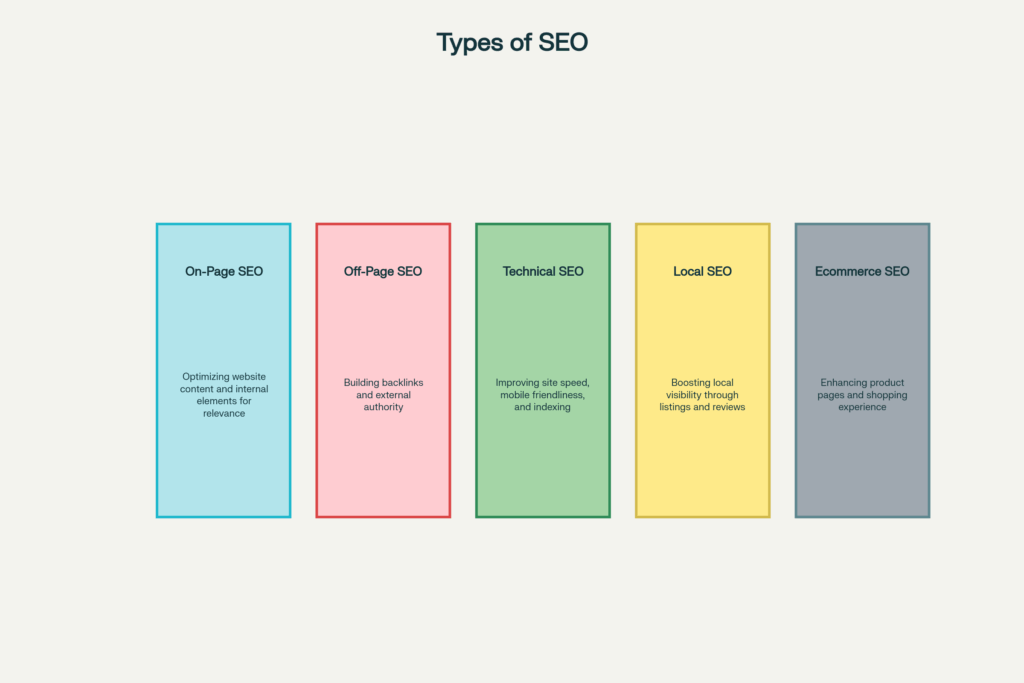
There are several types of SEO, and understanding each one is essential for a well-rounded digital marketing strategy.
- On-Page SEO: Everything on your website that you can control. This includes title tags, meta descriptions, keyword placement, internal linking, and image optimization.
- Off-Page SEO: Actions taken outside of your own website to impact your rankings within search engine results pages (SERPs). This includes building backlinks, social media marketing, and guest blogging.
- Technical SEO: Optimizing the technical aspects of your website to help search engines crawl and index your site effectively. This includes mobile responsiveness, site speed, and structured data.
- Local SEO: Optimizing your online presence to attract customers from local searches. This is especially important for businesses with a physical location.
- E-commerce SEO: E-commerce SEO optimizes online stores to rank higher in search results, driving organic traffic and increasing product sales.
Actionable Tips to Improve Your SEO Skills
Want to improve your SEO skills? Here are some things you can do right away:
- Keyword Research: Find out what words people are using to search for your product or service. Use tools like Google Keyword Planner to discover these words.
- Content is King: Create content that provides value to your audience. This means writing useful blog posts, making helpful videos, and solving your customers’ problems.
- Build Quality Backlinks: Get other credible websites to link to your site. This shows search engines that your website is a reliable source of information.
- Optimize for Mobile: Make sure your website looks good and works well on mobile devices.
- Track Your Progress: Use tools like Google Analytics to see how your SEO efforts are paying off.
Are you ready to start improving your SEO? Start with keyword research and see how you can tweak your website content!
FAQs About SEO
Q1: What is SEO, and why is it important?
SEO (Search Engine Optimization) is the practice of optimizing a website to improve its visibility on search engines. It is important because it drives organic traffic, builds credibility, and enhances user experience.
Q2: How long does it take to see results from SEO?
SEO results can take time, typically ranging from a few months to a year, depending on the competitiveness of your industry and the effort invested.
Q3: What are the key elements of on-page SEO?
Key elements include optimizing title tags, meta descriptions, content quality, keyword placement, internal linking, and image optimization.
Q4: How can I improve my website’s ranking on Google?
Improve your website’s ranking by conducting keyword research, creating high-quality content, building quality backlinks, optimizing for mobile, and tracking your progress with analytics.
Q5: Is SEO a one-time task, or does it require ongoing effort?
SEO requires ongoing effort due to changes in search engine algorithms, competition, and user behavior. Continuous monitoring, optimization, and content updates are essential.
References
- What Is the Role of SEO in Digital Marketing? – https://moz.com/learn/seo/role-of-seo-in-digital-marketing
- The Importance of SEO in Digital Marketing: Why You Should Learn It – https://www.linkedin.com/pulse/importance-seo-digital-marketing-why-you-should-learn-web-trainings-pnw7e
- Search Engine Optimization (SEO) for Marketers – https://marketingcommunications.wvu.edu/professional-development/marketing-communications-today/marketing-communications-today-blog/2025/02/18/search-engine-optimization-seo-for-marketers
- Why SEO Matters in Digital Marketing – SEO 4 AFRICA – https://seo4africa.com/lesson/why-seo-matters-in-digital-marketing/
- Why Learn SEO? – Noble Desktop – https://www.nobledesktop.com/learn/seo/why-learn-seo